

What are the key factors for seat comfort in an auditorium?
Leg Room
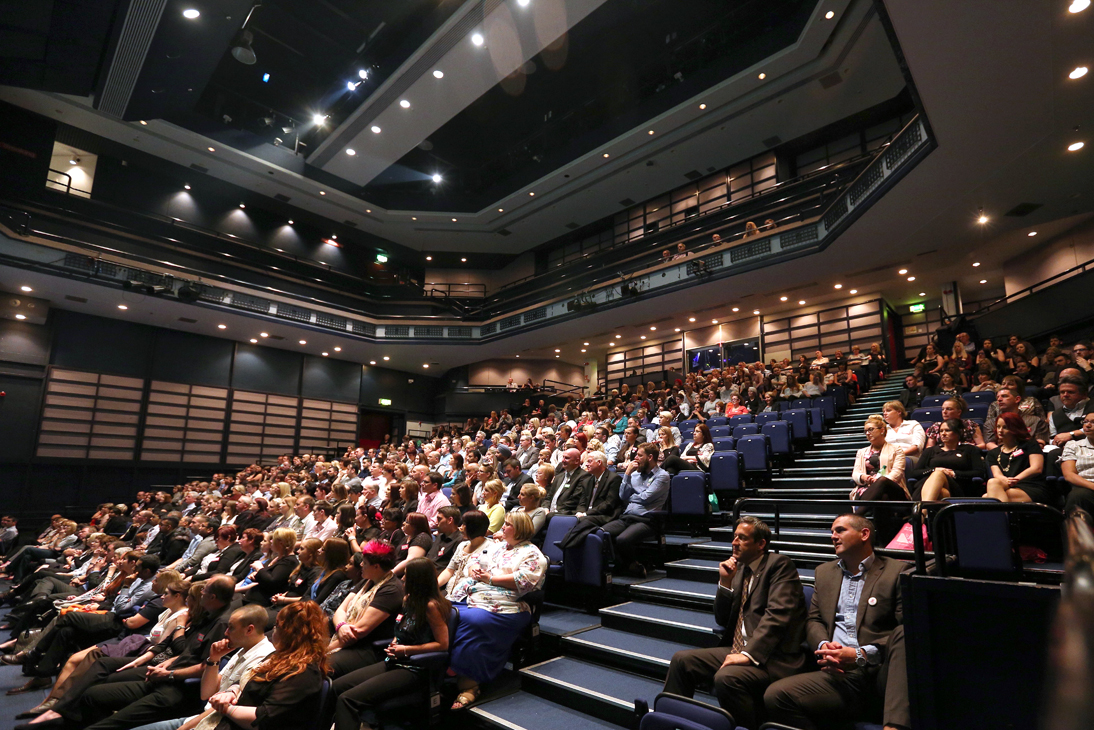
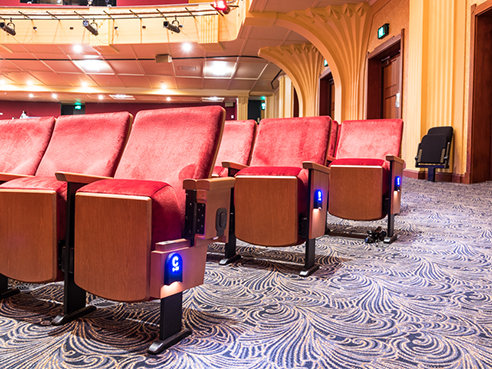
Leg room is often the first thing audience members notice when it comes to comfort. Limited legroom does not just cramp the legs, it can affect the whole posture. Audience members may be forced into static positions, often with hunched shoulders, which can lead to discomfort, muscle fatigue, and poor alignment of neck, spine and hips.
For comfort, Audience Systems recommend as a minimum a row depth (the distance between the front of one row and the front of the next) of 850mm – although many venues opt for a row depth of 900mm or more to ensure audience comfort. Leg room will also vary with row rise, so with a steep rake, a greater row depth may be optimal. We can provide advice, studies and drawings to assist with this.
Seat Angle
Getting the seat angle right is also important. A seat that allows the pelvis to tilt backward can cause the lower back to round, leading to strain, fatigue, and pain. If you’ve ever sat through a long event in a badly designed stacking or folding chair, for example, you may well have noticed this phenomenon! The best seats allow the hips to be positioned level with or slightly above the knees. The seating configuration should also allow the feet to be flat on the floor, below or in front of the knees.
Our Alto seat further enhances the sitting position with its Duck Tail seat, which subtly slopes at the rear. Measurements of pressure distribution in this seat show that body weight is well dispersed over a wide area, relieving pressure on the sciatic bone, buttocks and lower back.
Seat Design
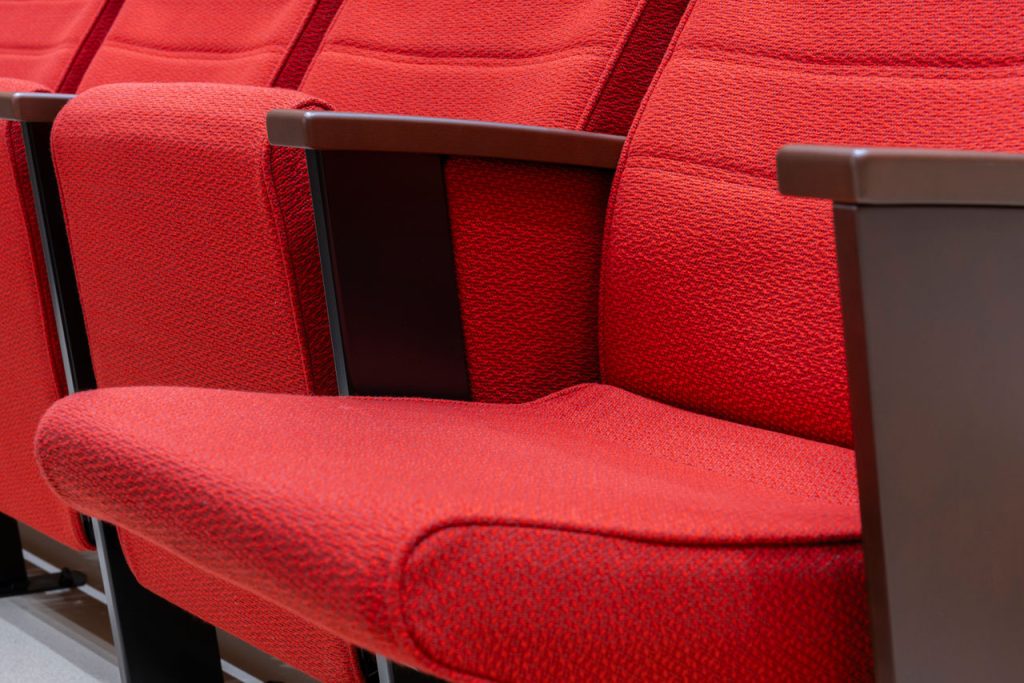
Remember also that although a thick seat looks comfortable, this is not always the case! In fact a thick wedge of foam behind the knees can impede the range of movement. The key is good support. Audience Systems for example offers the Espace and Accolade with the option of a super-supportive “Concert Comfort” seat. Using the same “pocket spring” technology that is used in mattresses, this seat is specifically designed for long performances or all-day conferences.
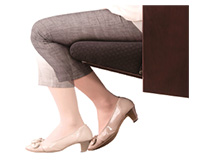
Freedom of movement for the lower legs is also important. The Soprano and Mezzo seats have an optional “Spacia “ seat pan which is specially designed to allow the lower legs to regularly change position. This minimises loss of circulation in the legs whilst sitting.
Support for the Mid Back and Shoulders
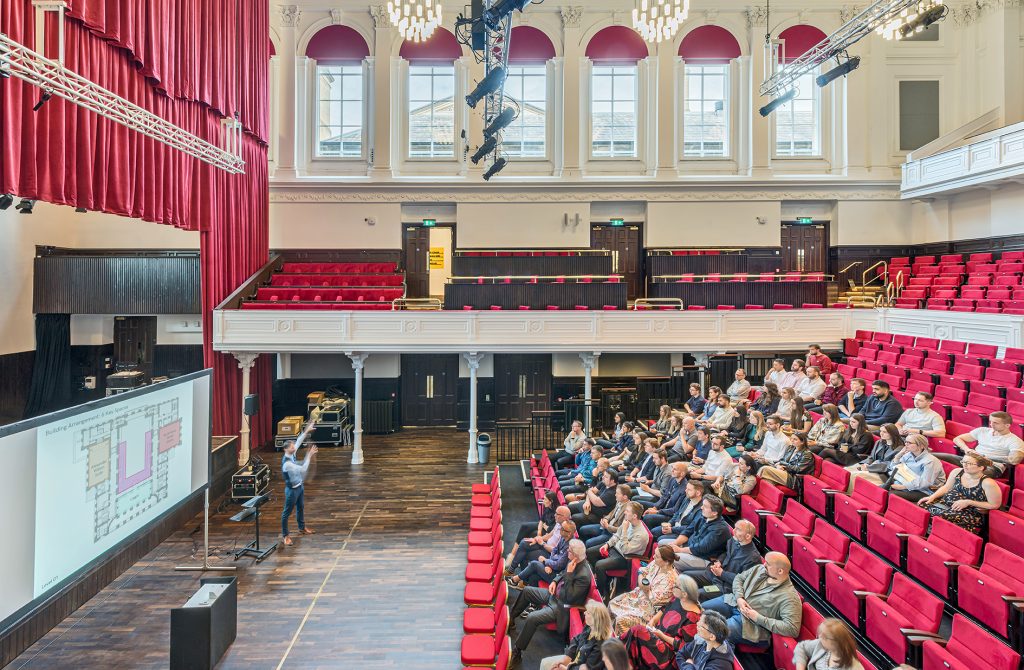
Good support for the upper sections of the back can prevent hunching and relieve pressure on the neck. A chair with good support for the upper back (eg Recital or Espace High Back) is of course important. But it’s also important to get the back angle right. Think about the angle the audience member will have to sit at. In the stalls with a raised stage, they will naturally sit back in the seat with the chin tilted up. In the uppermost circle of a theatre, or in the top tier of an arena, they may be sitting forwards with the chin tucked to look down at the performance. In these sections, it’s important to study posture and consider tweaking the angle of the chair backrests to provide a more upright seat geometry.
Seat width also has a role to play in shoulder support. Narrow seats cause people to have to round their shoulders to avoid contact with their neighbours. A width between the centres of adjoining seats of at least 500mm will allow most people to sit in a natural posture with the shoulders back.
Accessibility
Comfort is for everyone, so it goes without saying that a good auditorium design will consider wheelchair users, the ambulant disabled, the elderly, and those with invisible disabilities. As well as assisting you with an inclusive design which considers step-free access, additional legroom and integration of wheelchair users (even within banks of retractable seating), Audience Systems has a number of chair options which can help.
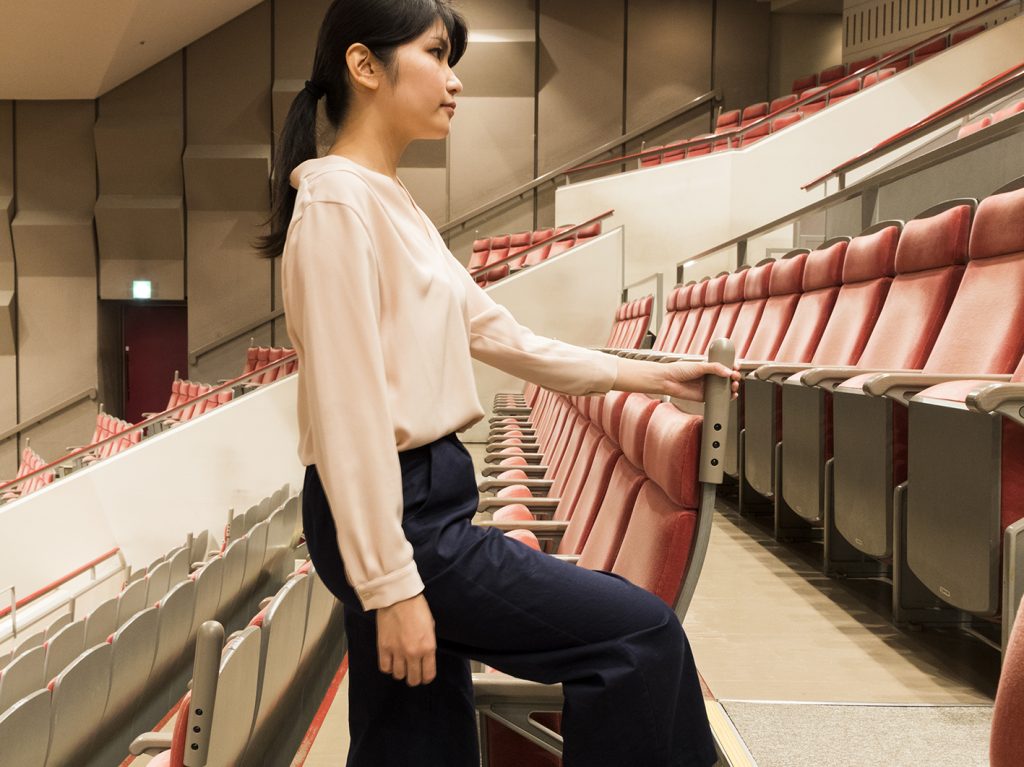
Audience Systems’ Soprano and Alto chairs offer transfer armrests which can be opened up, rather like a gate. These allow certain wheelchair users and people with limited mobility to access the seat from the side. Soprano, Alto and Mezzo can also be adapted to include various designs of handholds on the upper backrest. Placed on the seats closest to the aisle, these help audience members to steady themselves as they walk up or down aisle steps, and were designed with an eye to our ageing population.
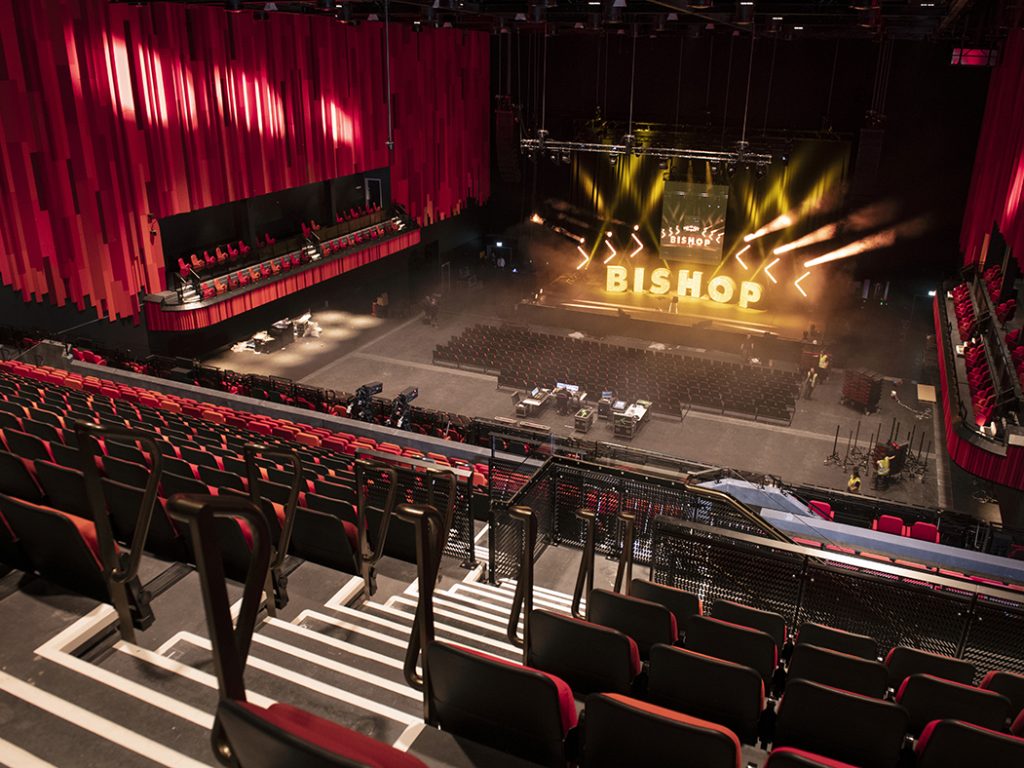
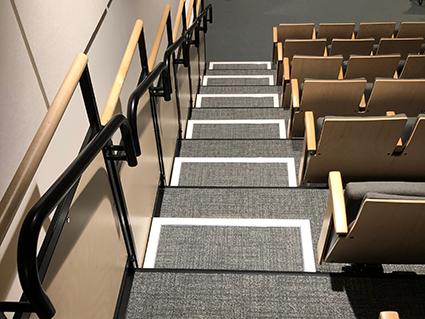
If the chair you specify is not suitable for this adaptation, we have various ‘grab rail’ designs which can be attached to the aisle step or side rail.
We can also help you to ensure comfortable sightlines to caption boards, as well as considering noise levels for your sensory-adapted performances.
So What Now?
To design your auditorium with comfort in mind, just get in touch. Audience Systems can visit your site to provide expert advice and a custom layout perfect for your venue and your audience. Contact us now to take your next step!
